

Millions Missing Portrait Project - connection and meaning through art, mapping our history in life and death
By Naomi Sawatsky
TW: mentions of MAID and death
‘This project was initiated in response to the passing of an online connection, who died on February 1st, 2026, in Austria. It is important to recognise and honour the lives of individuals living with and affected by ME/CFS with respect and dignity.
ME/CFS can be a life-threatening illness, and those suffering in our communities often face silent struggles (USA Today and Myers). These challenges are not only physical but also psychosocial. Without adequate research, awareness, and support from government, healthcare systems, and everyday society, many individuals may become isolated and marginalised.
This year alone, I have witnessed the loss of numerous individuals to this illness. Given that ME/CFS remains under-researched globally, this project aims to highlight the resilience, stories, and challenges of those with the most severe cases.’
— Millions Missing Portrait Project proposal
This condition is undoubtedly isolating. For the most severe cases, it’s completely debilitating. With a diagnosis that remains critically under-researched and poorly understood (USN et al.), those most affected are frequently unable to advocate for themselves. Through whose perspective will our history be recorded? What narratives will be shared about our lives and experiences? How can we remember ourselves with dignity during challenging times?
The death of a distant online connection, Samuel Prinz-Reiterer, prompted many questions for me and was deeply felt by others within the broader ME community. His story of suffering and his conclusion that he would then die from this illness gained significant attention on Reddit, attracting widespread interest and eventually reaching national news outlets in Austria (Kronen Zeitung). The web of connections in the online ME/CFS spaces felt it too. The loss of someone in their early 20s, taken by an illness that remains poorly understood, was felt deeply. I observed his story spread rapidly across the internet, reaching its target audience and beyond. I messaged him mid-January and talked in very short bursts (in my badly translated German) in the time leading up to his passing. He shared photos of himself, smiling and working out (photo A), sick in bed, near comatose (photo B). I painted all the pictures. He liked the colour. On February 1st, he passed by MAID.
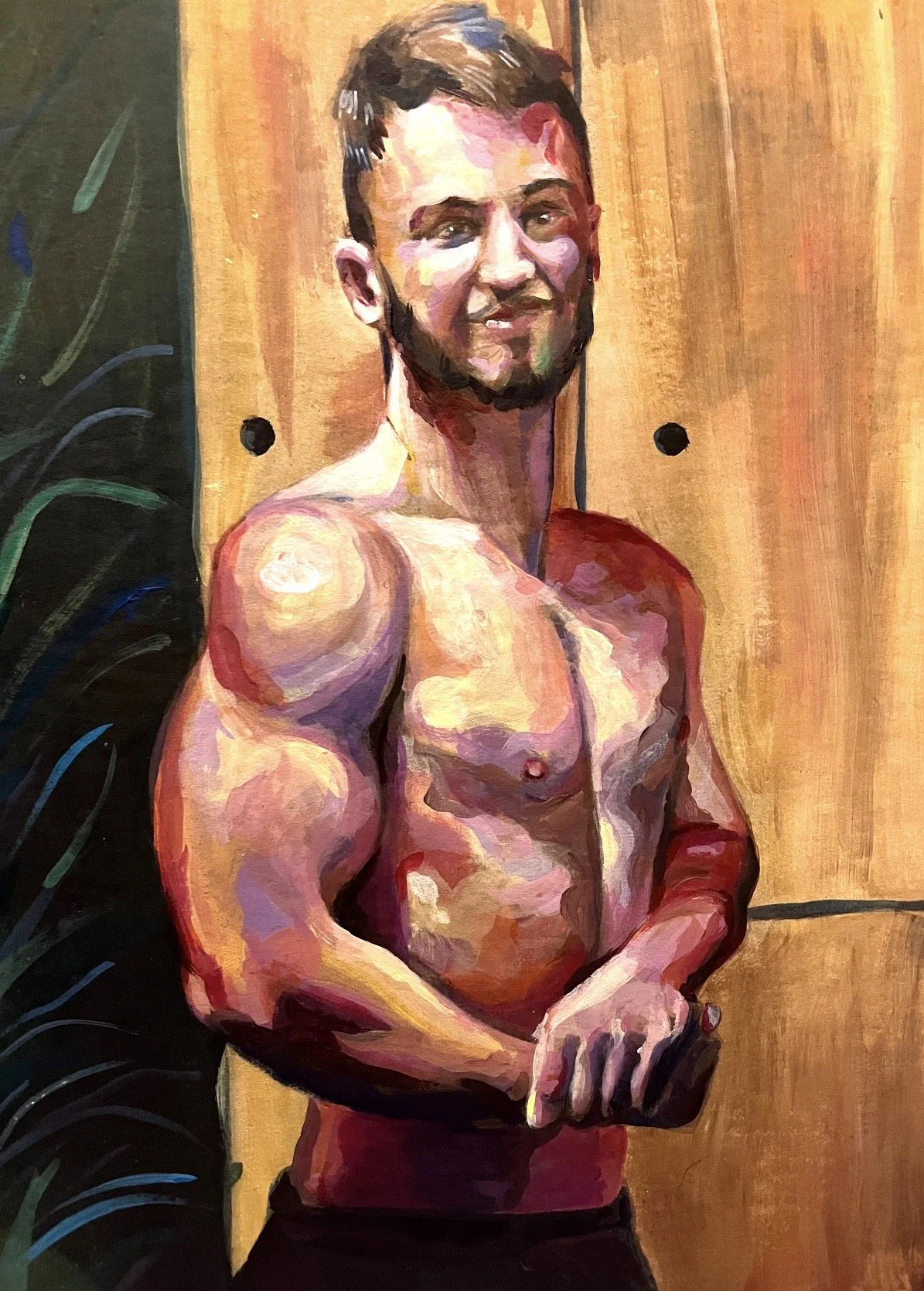
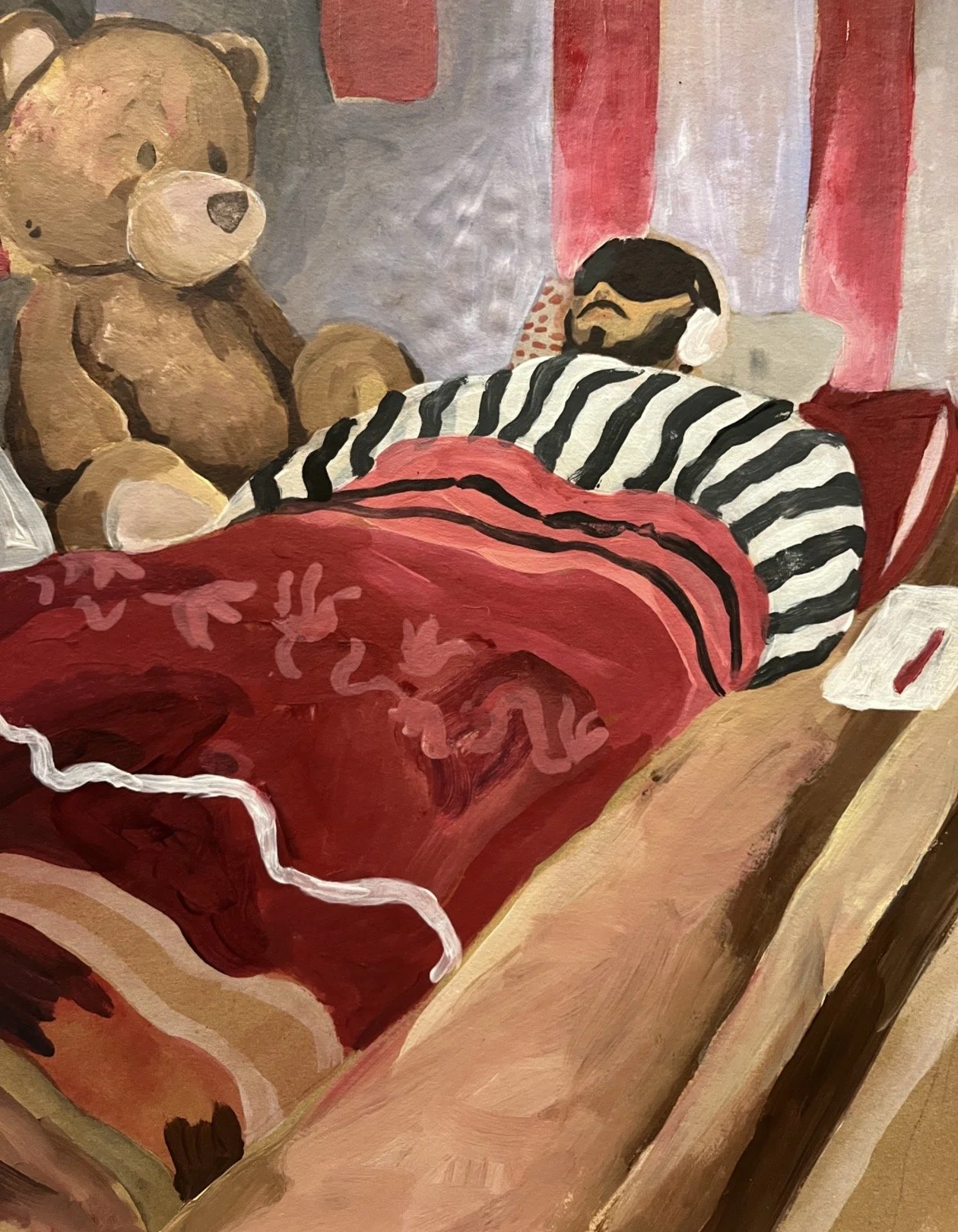
A few things about Samuel: he was 21, his favourite colour was red, he liked exercising and the outdoors (photo C), video games, and pop music. He got ill around 2024, became bedbound, and before his passing publicly advocated for awareness of the lack of government support in Austria (and across the world) and the devastating effects of the condition.
‘THERE IS NOT A SINGLE LICENSED MEDICATION FOR THIS DISEASE. In Austria, there is not a single specialised contact point or clinic, even though 1 in 100 people is affected. Most doctors don’t even know the disease exists. – That’s why I'm asking you to spread my story, bring it to the media. Share it on social media. Help me raise awareness about this terrible disease with my death!’
— Samuel Prinz-Reiterer, translated from German
His story sparked the beginning of this project, along with the advocacy around the Millions Missing Movement started by ME Network (Bustle). For those of us most severely affected, who are often unable to advocate for ourselves, I wondered how our stories will be remembered. The beautiful, full lives and the frustration of being chronically ill. In the nearly 10 months since the initiation of this portrait project, I've met so many wonderful people in my own city and across the world, some of whom shared stories of living with ME, photos of their lives currently in bed, favourite photos participating in special activities, childhood photos, and more. (photos D and E)
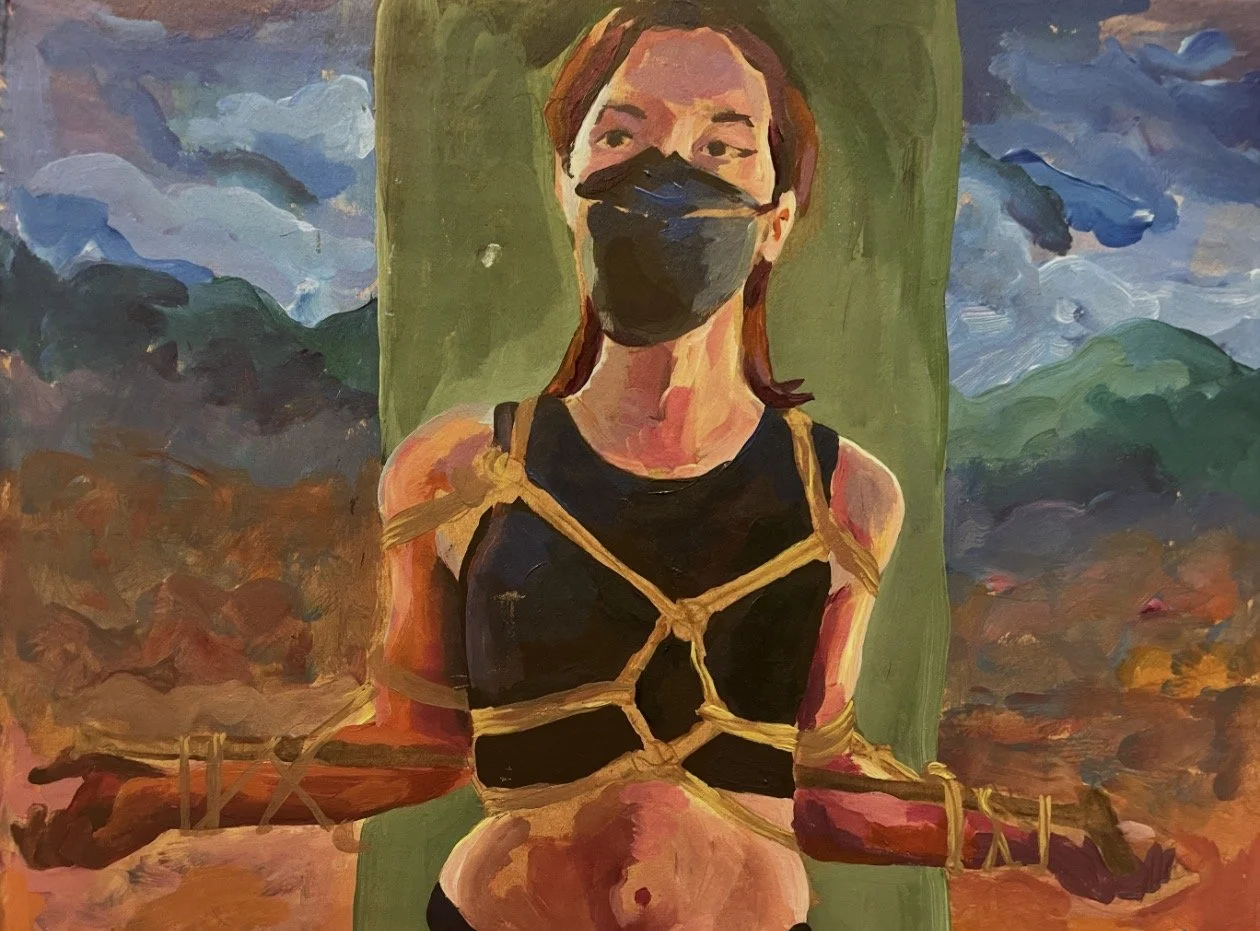
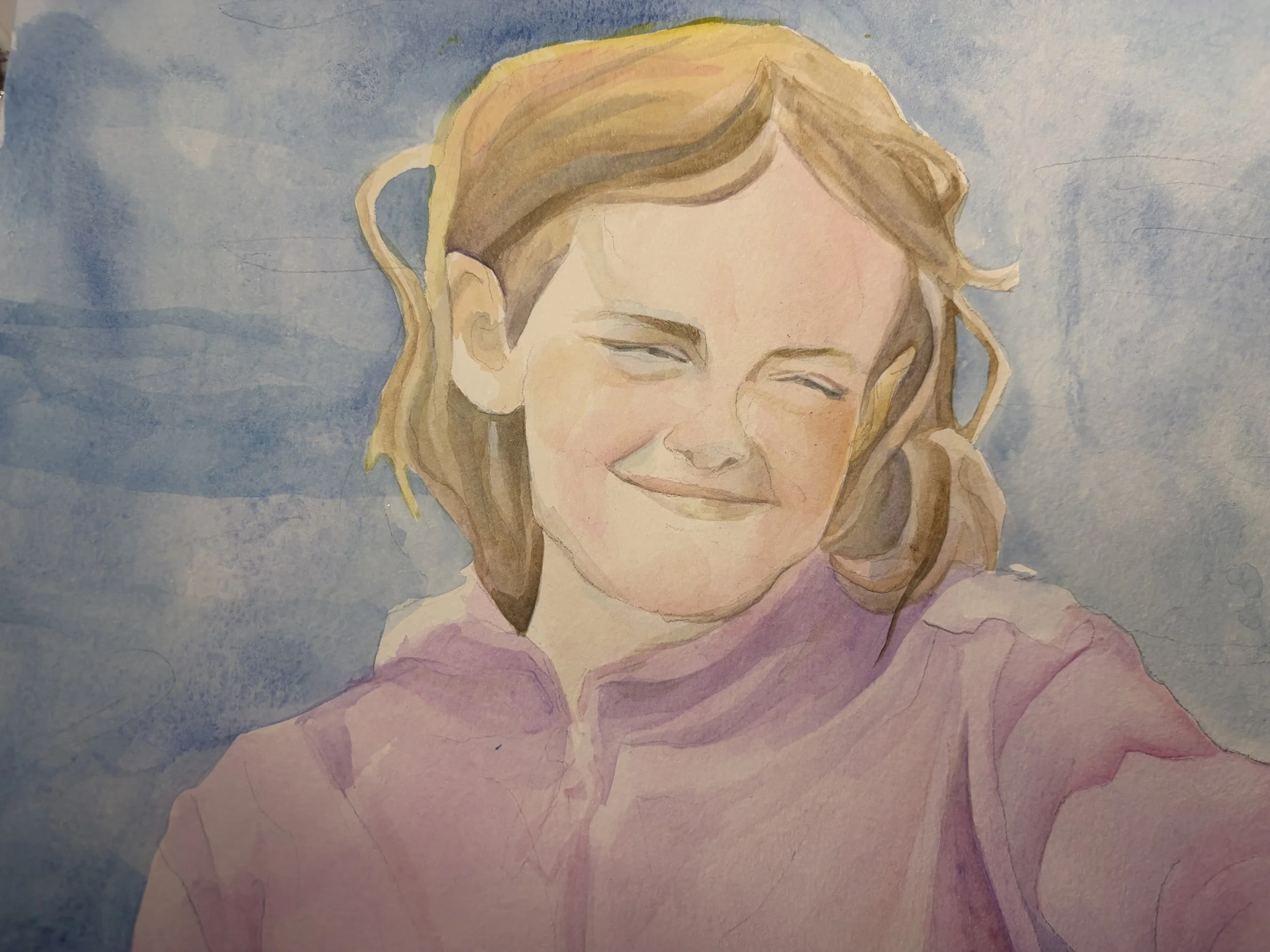
This project started in my own confusion and fear for the disabled/chronically ill community at large, and in my own city, Vancouver, Canada. Our province’s ONLY specialist clinic has been struggling to remain operational and provide care, with a waitlist of 4-5 years, recently facing closure due to funding cuts, which sadly isn't an uncommon story (CBC News and Cornish). I worry about my hometown, and friends in rural places and down south. Speaking to others in Mega Cities like Los Angeles and New York, I'm perplexed by how we face the same shared difficulty in accessing healthcare and essential support services. Months have gone by between painting sessions. Darker days have gone by where I wonder if I can still call myself an artist. Learning from and being in community with other ME individuals has been a shining light during flares and complications with appointments. Continuous learning from those in severe states has kept this project going.
When researching ME for this Portrait Project and exploring the power of self-archiving, I reviewed my own artwork created and organised since elementary school. These pieces reflect my experiences of living with an unwell body and the complex emotions I faced growing up, long before I had the words to describe them. My artistic practice has always been centred around people, and in the last 5 years I’ve practised memorial portraiture to remember lost ones. When I got sick in 2023 and my painting slowed down to nothing, I came back to what was familiar, painting what I don’t know how to express and using that as a means of remembrance. Since February a handful of other personal connections have passed due to complications with ME and countless more around the globe. In the little time I spend now on social media, a dark blue heart pops up. Sometimes I'm familiar with the names of those who’ve passed, sometimes not, always devastated.
Since becoming ill, having these connections with others who understand, no matter how far, has made the most meaningful impact in my journey yet. Starting this project, I was 4 weeks into my worst PEM episode recorded, stuck spending 20+ hours a day in bed, new appointments every other week and unable to do most of anything. Now, almost a year later, I'm pushing for decent care. I've started 10 portraits and finished only 6, which sometimes feels momentous and other times like I've hardly started, which is not an uncommon feeling. I'm back to a moderate state, occasional flare aside, homebound most days. I’m able to participate more in life and my hobbies, which has reawakened my creativity, which at times felt lost for good. I am thankful for the unspoken understanding that connects us despite the time and language barriers between some of us.
When initiating, the goal was an exhibition and publication of this project in full spring/summer 2027. Yet I don't know the future of this as a whole, or when the timing will work due to living in my own sensitive body. There has been support from new connections across the globe, and it’s reawakened my own passions through finding a way to stay connected to the world and keep making art from bed. Creativity is something I believe lives within us all, though it can hibernate for seasons at a time. It's in us all when we cook, garden, write, sew, etc. Below are some recommendations of music, audiobooks, and more that I've learned from. I hope you'll be able to check them out on your own time, in bed, anywhere in the world through YouTube, your local public digital library, audiobook files and other free streaming services.
Art that has changed my life living with ME (books, music, and more):
Rosasharon Teaches Me to Breathe: On Animals, Disabilities, and Intimacies” - By Ada Hubrig - Featured on Disability Intimacy By Alice Wong (2024)
The Attic Tape Album, and I Don't Want To Be A Loon - EP by James Strazza
The Life Pursuit - Album by Belle and Sebastian and Stuart Murdoch Advocacy around ME/CFS
Care Work; Dreaming Disability Justice by Leah Lakshami Piepzna-Samarasinha and their other books
Wisdom of Your Body - by Hilary McBride specifically the easy-to-follow prompts and lists
The Re-showing of ‘My Bed’ - By Tracey Emin at Tate Modern (1998- re-shown 2026)
RestFest Film Festival’s free screenings and gatherings
The Nap Ministry by Tricia Hershey and related works
About the Author
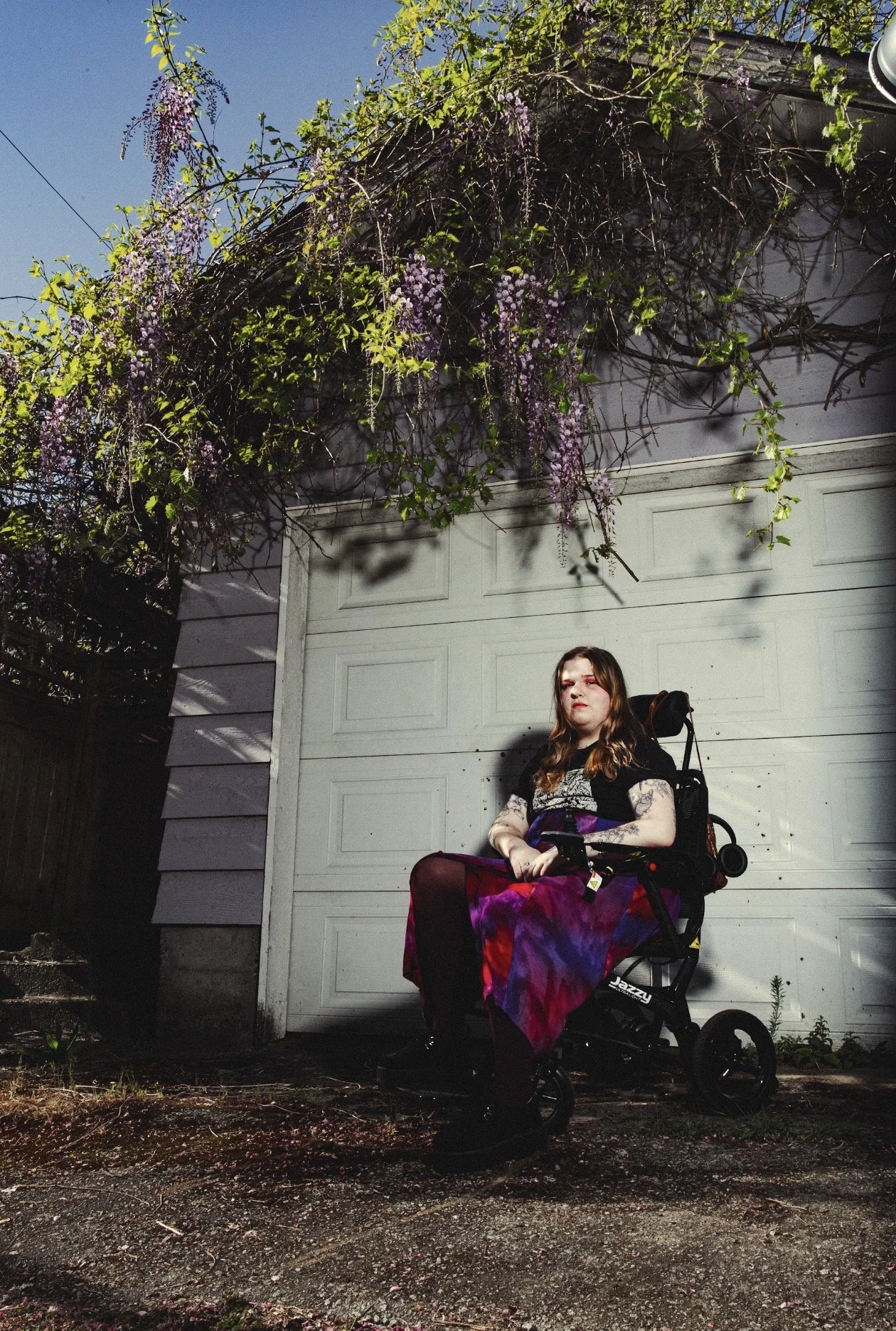
Naomi Sawatsky is a queer disabled creative and a self-taught multimedia artist and writer from Winnipeg (winipīhk), Canada. Their artistic practice is rooted firmly in disability activism, accessibility, and queer rights. Naomi's art has been featured in galleries along the Canadian West Coast and Lower Mainland, and she co-founded 'Beautiful Trash for Beautiful People,' a Queer DIY arts magazine, distributed across the country.
Instagram: @jebs.junk
Sources:
CBC News and Ruby Cornish - https://www.cbc.ca/news/canada/british-columbia/long-covid-msp-changes-9.7391205
Kronen Zeitung - https://www.krone.at/4029771
Samuel Prinz-Reiterer - https://www.reddit.com/r/Austria/comments/1qg8oit/ich_bin_samuel_21_leide_an_mecfs_und_in_12_tagen/
USA Today and Gene Myers - https://www.usatoday.com/story/news/health/2022/02/12/epstein-barr-chronic-fatigue-syndrome-montclair-nj/6720536001/?gnt-cfr=1
USN, et al. - https://www.usnews.com/news/articles/2016-09-28/protesters-demand-increased-funding-or-me-cfs-research
Illustration, Editing, and Formatting by Lily Lime
