

Long Covid in a ‘Post-Pandemic’ World
By Kelley Meister
The irony that a month after President Biden declared the pandemic officially over, I got my first Covid infection and developed Long Covid, still haunts me. A raging, grief-ridden ghost that taunts me while sitting on my shower stool, the water running down my face mixing with the tears, unclear if I’m crying or not. I rarely have the energy to cry. Or to shower, for that matter. I’m struck by another irony. If I use my precious energy to cry, I won’t be able to make my next meal or a piece of art. Long Covid is a series of cruel ironies.
After my infection, it took months to understand why I felt so miserable and tired– to see that there was a pattern emerging. When I exerted myself physically, mentally, and emotionally, I would crash. These crashes, known as Post-Exertional Malaise (PEM), meant I had to stop everything – stop teaching, stop grocery shopping, stop socializing, stop making art, stop leaving my house. I used to keep a mental list of all the activities I miss doing. The breeze through my hair while riding my bike down a hill, the heat of surrounding bodies at a queer dance party, the icy thrill of a Minnesota lake on the last swimming day of the season. But I’ve grown weary of the enormity of the list.
I spent many of those first months of my illness sifting through social media posts from disabled and chronically ill creators - trying to piece together an understanding of my own condition while also searching for a way to do the seemingly impossible task of living in a sick body. Those posts helped me understand that many of us with Long Covid have ME/CFS. Without them, it would have taken me much longer to understand what was happening to my body.
During those early months, I became sicker due to continuously overexerting myself. I grieved how hard it was to make art and access my studio. I spent most of my time and energy that first year going to specialists and searching out clinics that knew anything about Long Covid or ME/CFS. I eventually received my ME/CFS diagnosis a year after my initial Covid infection, both a validation and a grim reminder of how sick I really was.
ME is akin to watching your own death. You see how people just go on with things, how your attendance at social functions is forgotten as invites dry up, how few people care, and you lose yourself, swallowed into the couch, the bed, the house. When I do emerge, I’m sporting a sparkly Rollator or being pushed in a wheelchair, and I’ve become unrecognizable in a paradoxical experience of being both seen and unseen. I cannot tell if I feel like a different person or if everyone just expects me to be different now that I’m using mobility aids and so clearly disabled. In another way, maybe ME is more like taking a solo journey to the Arctic or the Moon. Something that changes you to the very core of your being, something that other people cannot imagine.
As an artist, I was practiced in making creative decisions and considering unconventional possibilities. But disabled creativity was something new. Disabled creativity was embedded in all of the new adaptations I was making, from brushing my teeth in bed with a disposable waterless toothbrush, to noticing all of the unusual places I could sit down between my apartment and the front door of my building, to incorporating breaks into all of my everyday tasks, to utilizing the medical detritus around me to make new art.
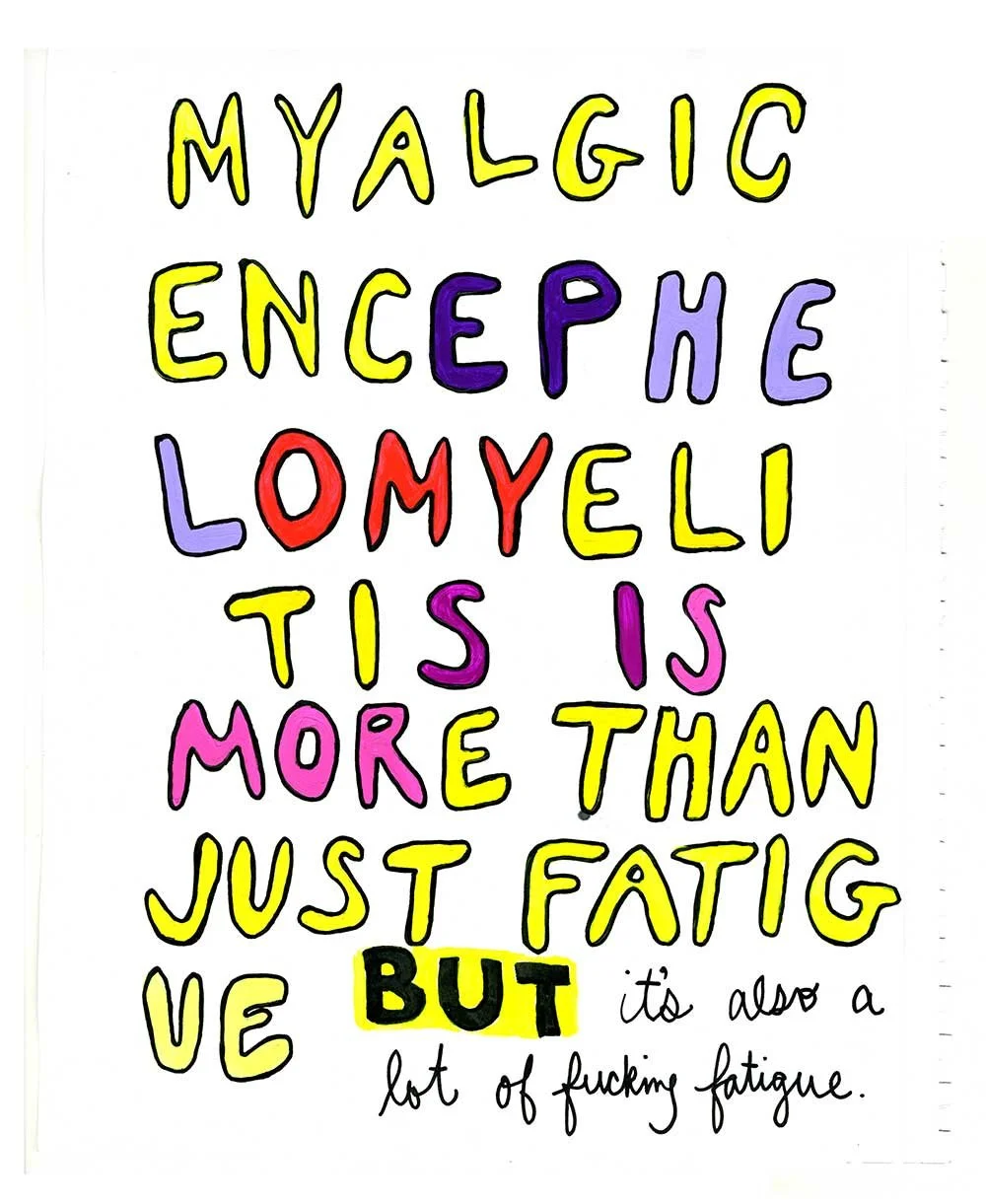
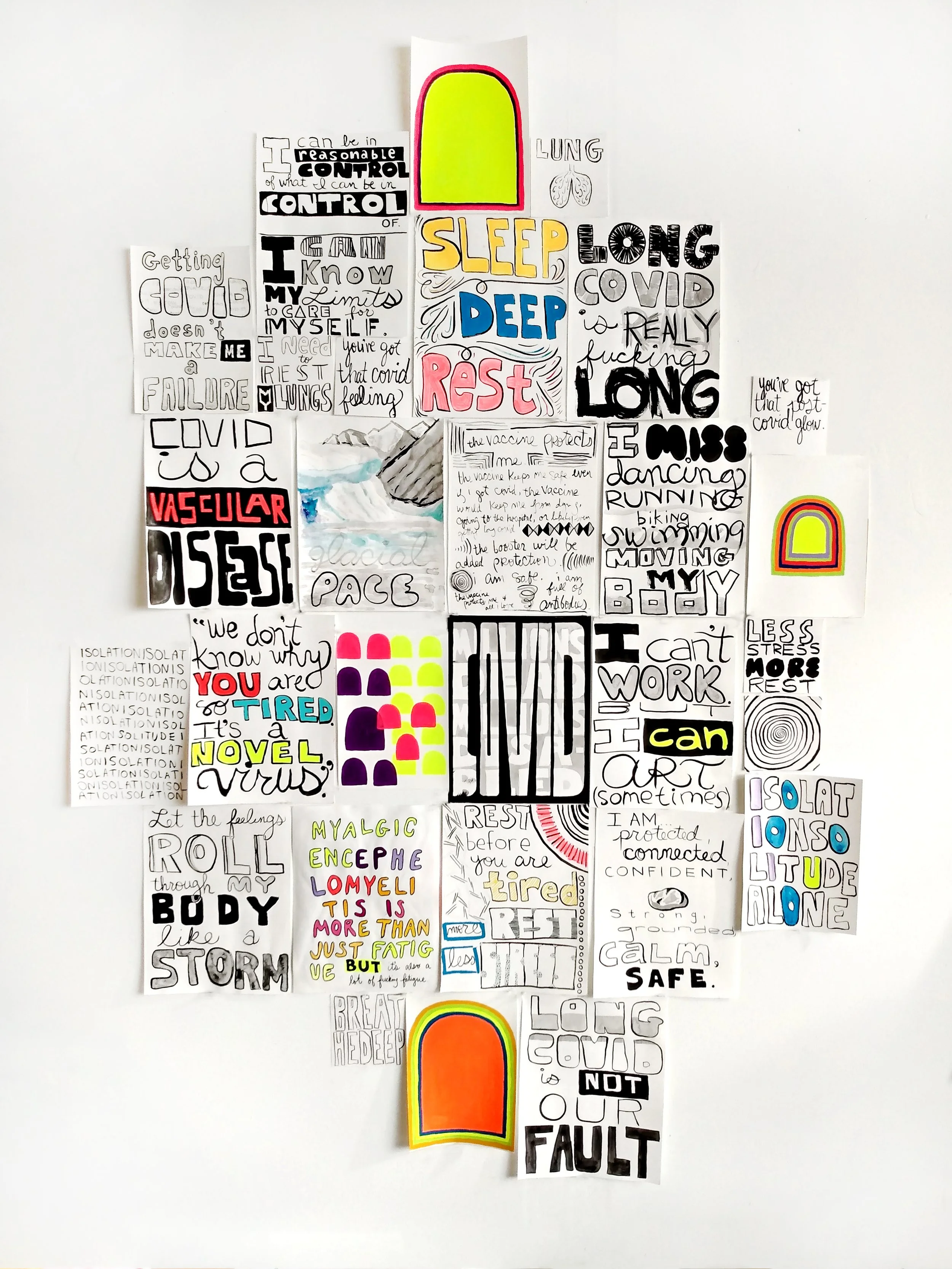
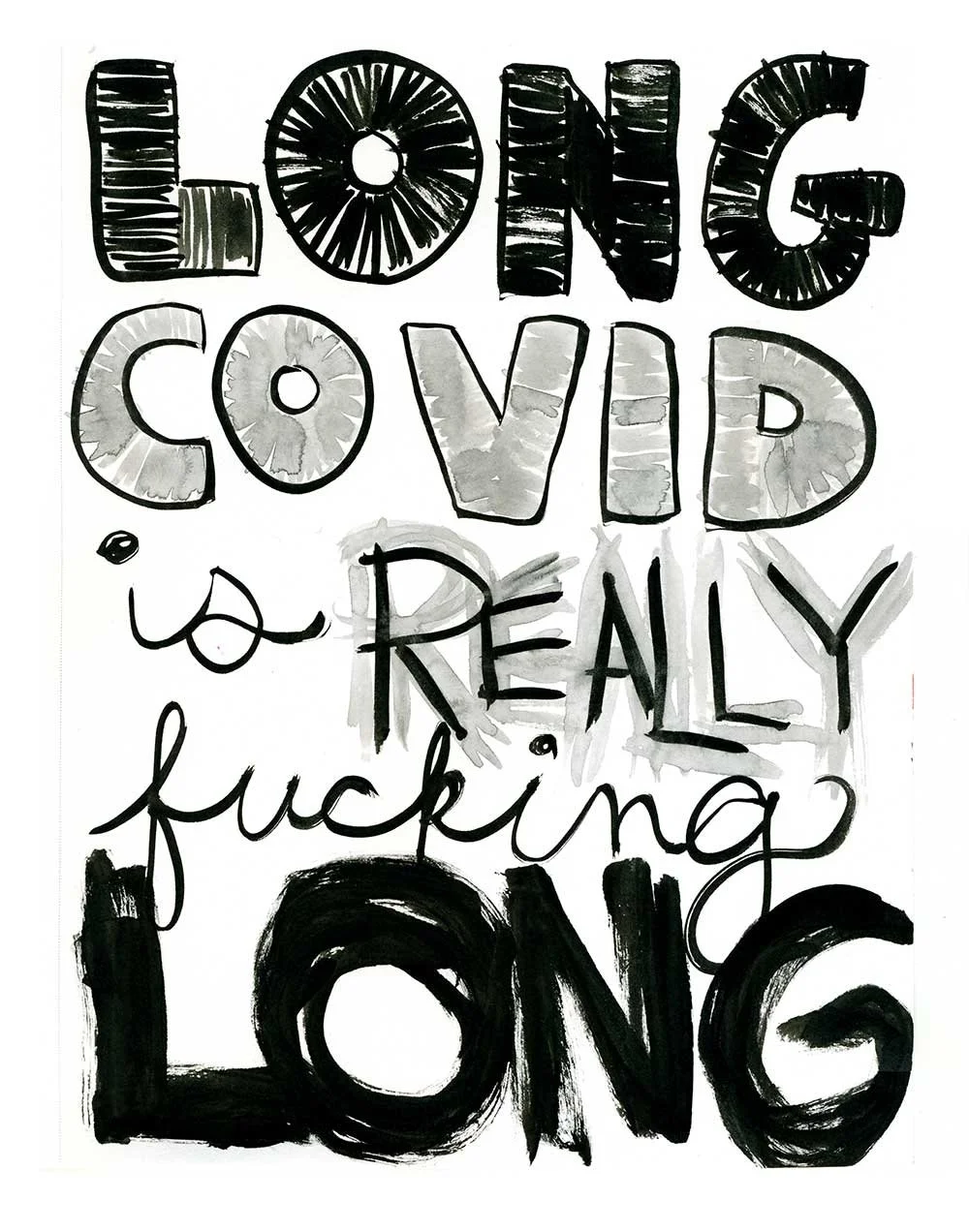
Before the pandemic, I spent over a decade making artworks about nuclear weapons and the impact radioactive waste has had on humans and the environment. This deep dive into the war machine helped me to understand some of the intricacies of American exceptionalism and our complicated relationship to risk analysis.
As the pandemic progressed, I recognized war-machine type decision-making emerging. When masking and Covid cautiousness became politicized and then dismissed as too expensive for businesses to keep up with, the implication was that vulnerable people are not worth caring about, and it's ok to let them die. Eugenics has long been an undercurrent of American domestic policy. It was easy for the logic of eugenics to become the framework for “back-to-work” and the manufactured “end” to the pandemic that U$ President Biden pushed in the spring of 2022 – the same season I got Long Covid. (1) Lately, I see the same war-room pandemic-type risk assessments come full circle. From Anthony Fauci to Pete Hegseth, so long as it isn’t happening to them, death is acceptable for increased profits.
(1) Obviously, Covid-denialism and eugenics-based decision-making are not exclusive to the U$, but as an American, I am more familiar with what transpired here, and leave the stories of other places to be told by those impacted.
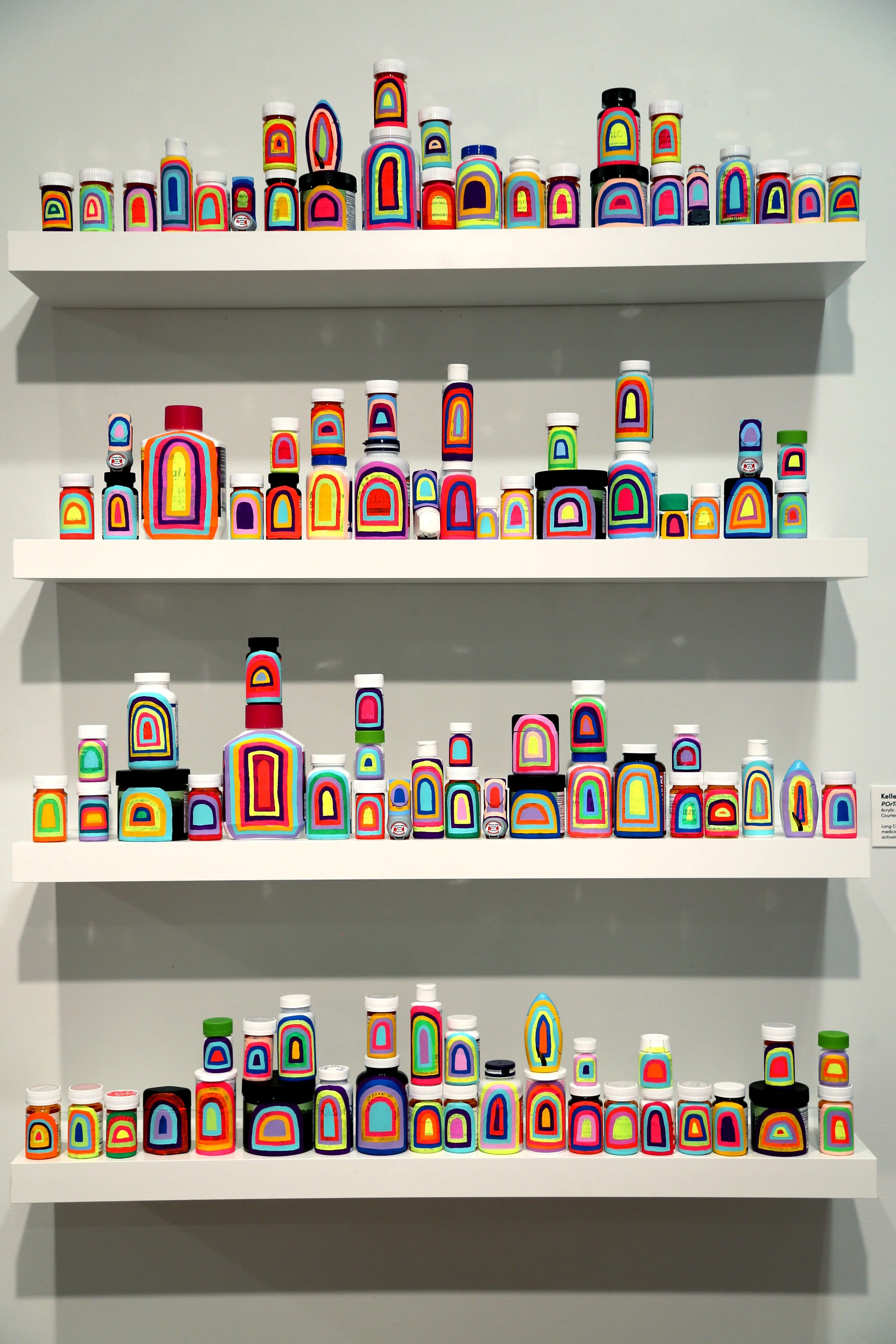
The first artwork I made after my diagnosis involved painting onto the accumulation of medicine bottles that were scattered around the couch, where I lived when I wasn’t in bed. Using bright, neon acrylic gouache, I created a meditative concentric archway shape I termed The Portal. The Portal emerged organically. I’m not entirely sure where from exactly, but I understood The Portal symbolized the long solo journey I was on. The stacks of medicine and supplement bottles, all attempts to return my body to its pre-Covid state, were portals of hope, yes. Yet they also came to represent an opening into disabled creativity. As with any transition, it has been hard to adjust to new ways of doing (or not doing) things. I grieve all that I have lost, even as I have also gained a new perspective. Disability is a portal to another way of living, and I’m curious what new possibilities lie through it.
About the author:
Kelley Meister (pronouns: ze/hir/hirs) is a visual artist based in St. Paul, Minnesota, USA. Hir artwork embodies the personal as political, capturing the pain, fear, grief, anger, and resistance involved in surviving a global pandemic during the eugenics of late-stage capitalism. Ze is investigating how to refamiliarize hirself with art-making in a body that has been affected on a vascular level by Covid-19, a body that is constantly fatigued, chronically pained, foggy, and just sl-o-w-w-e—r——r———r.
Instagram: @__kel.ley__
Website: https://kelleymeister.com
